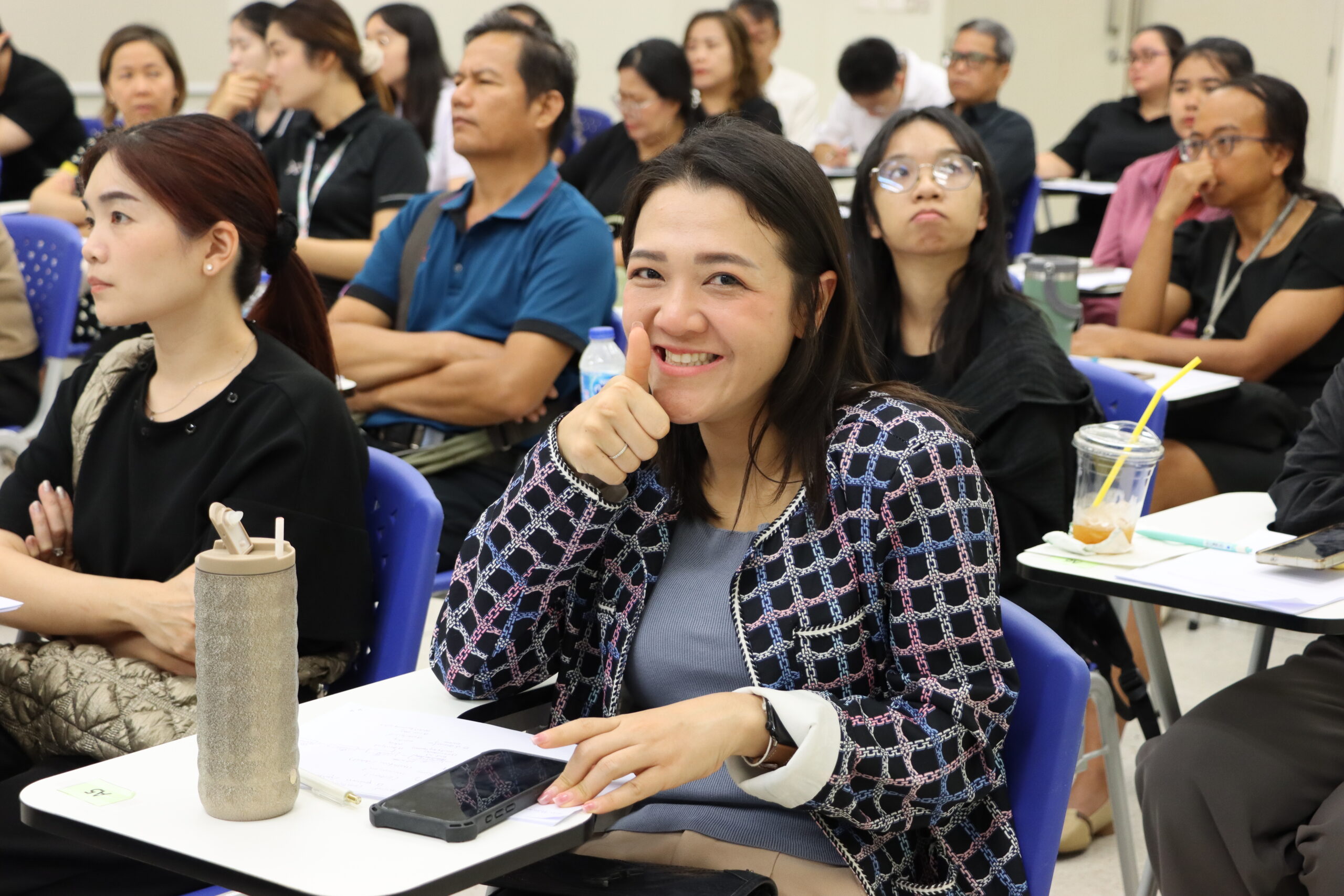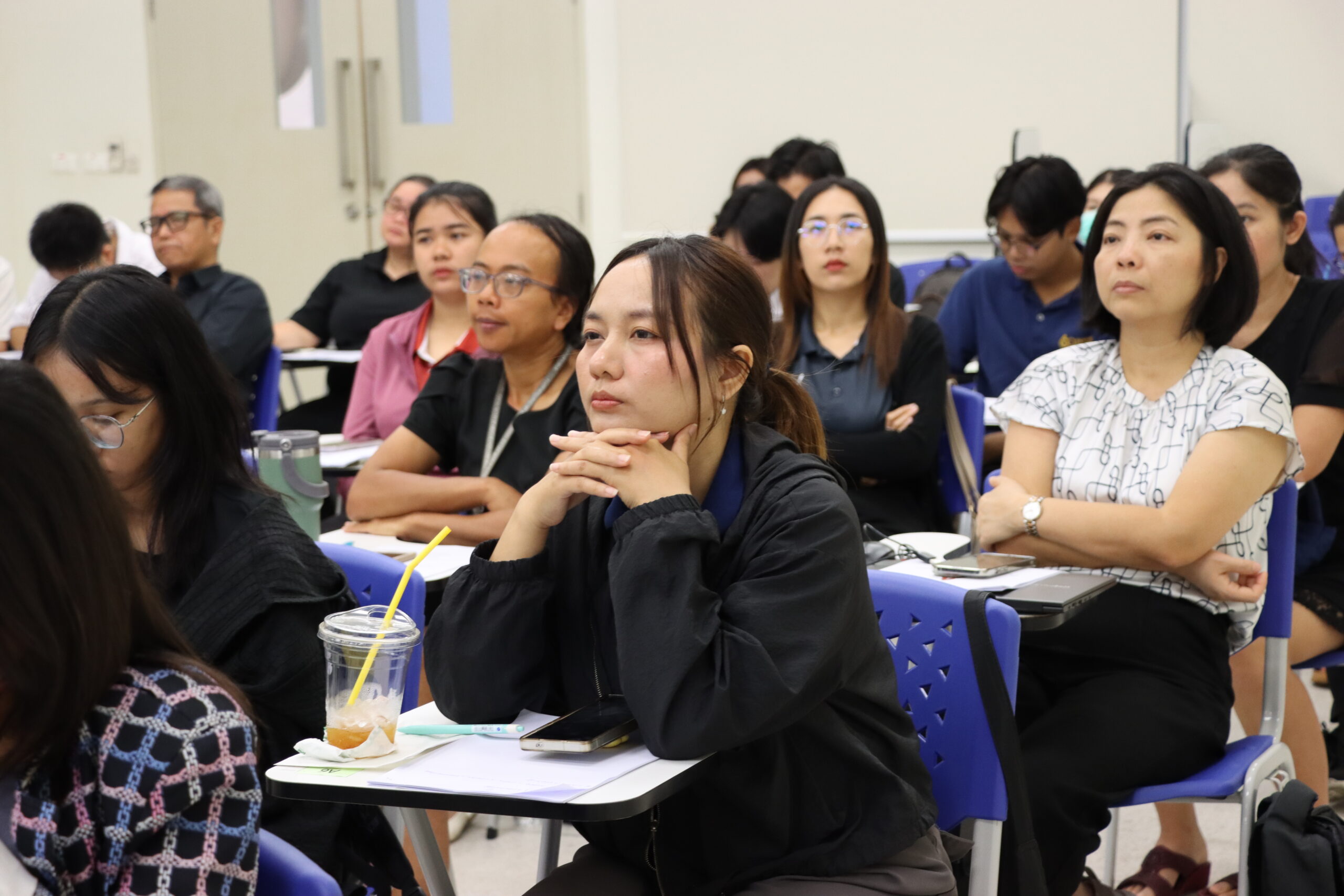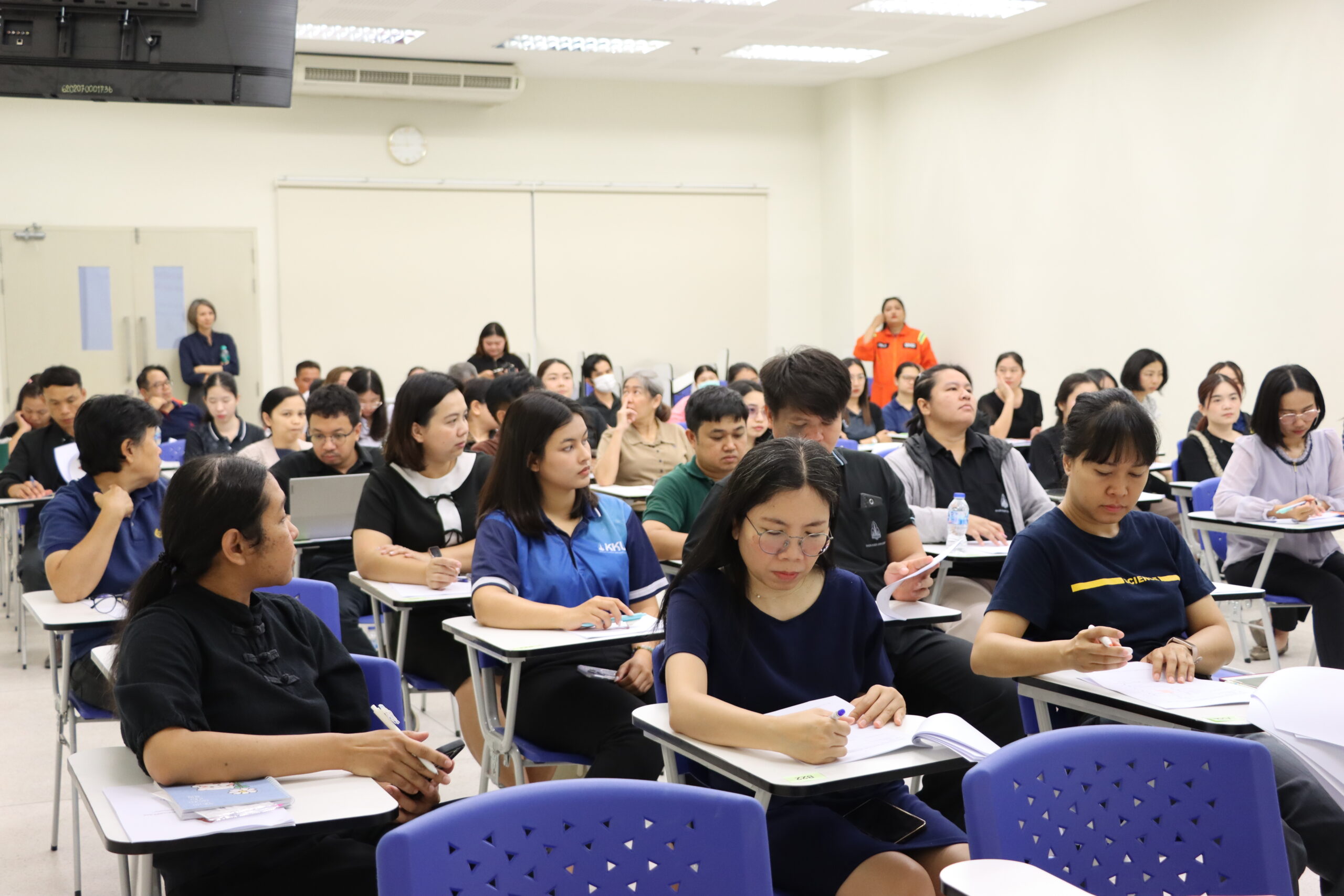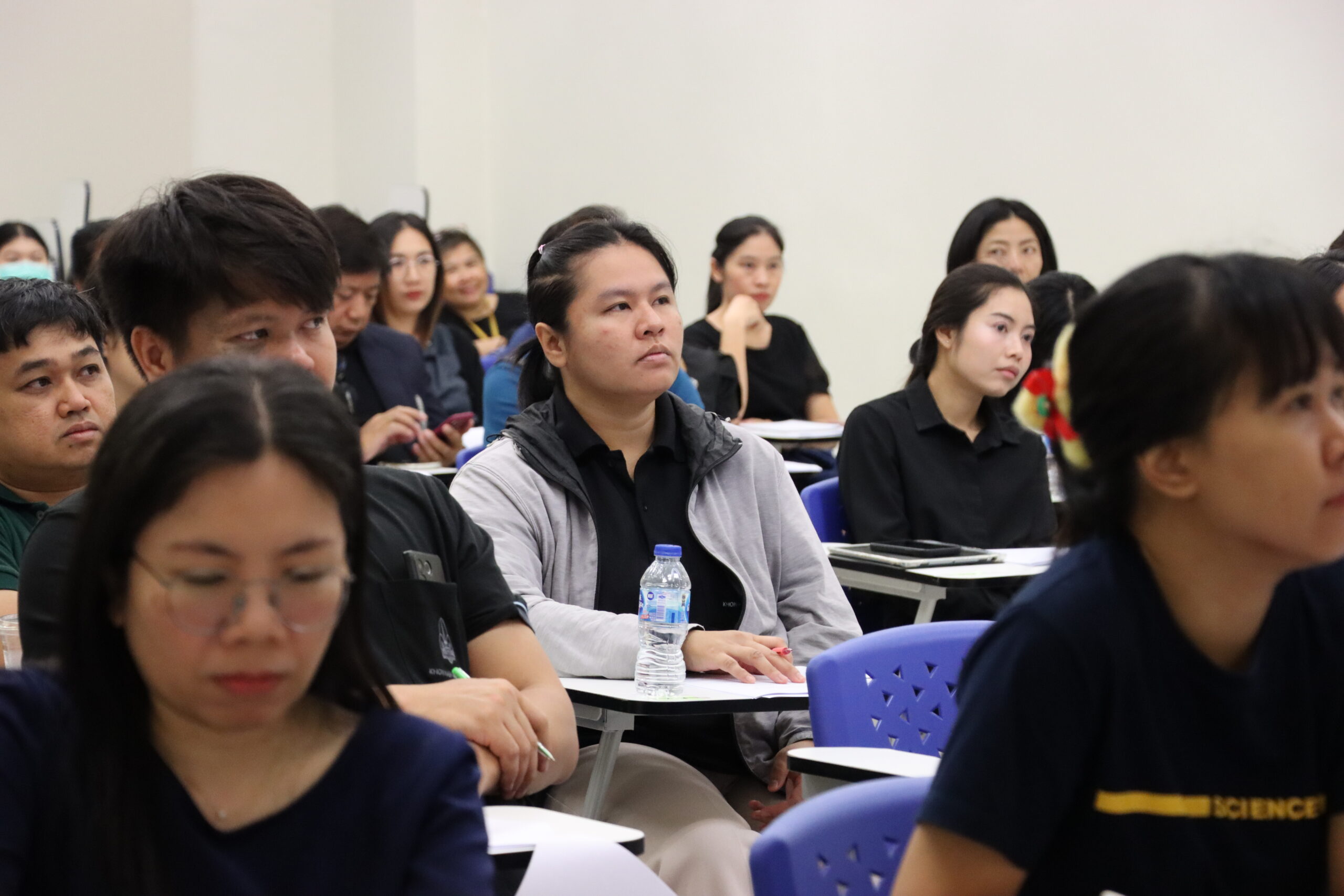
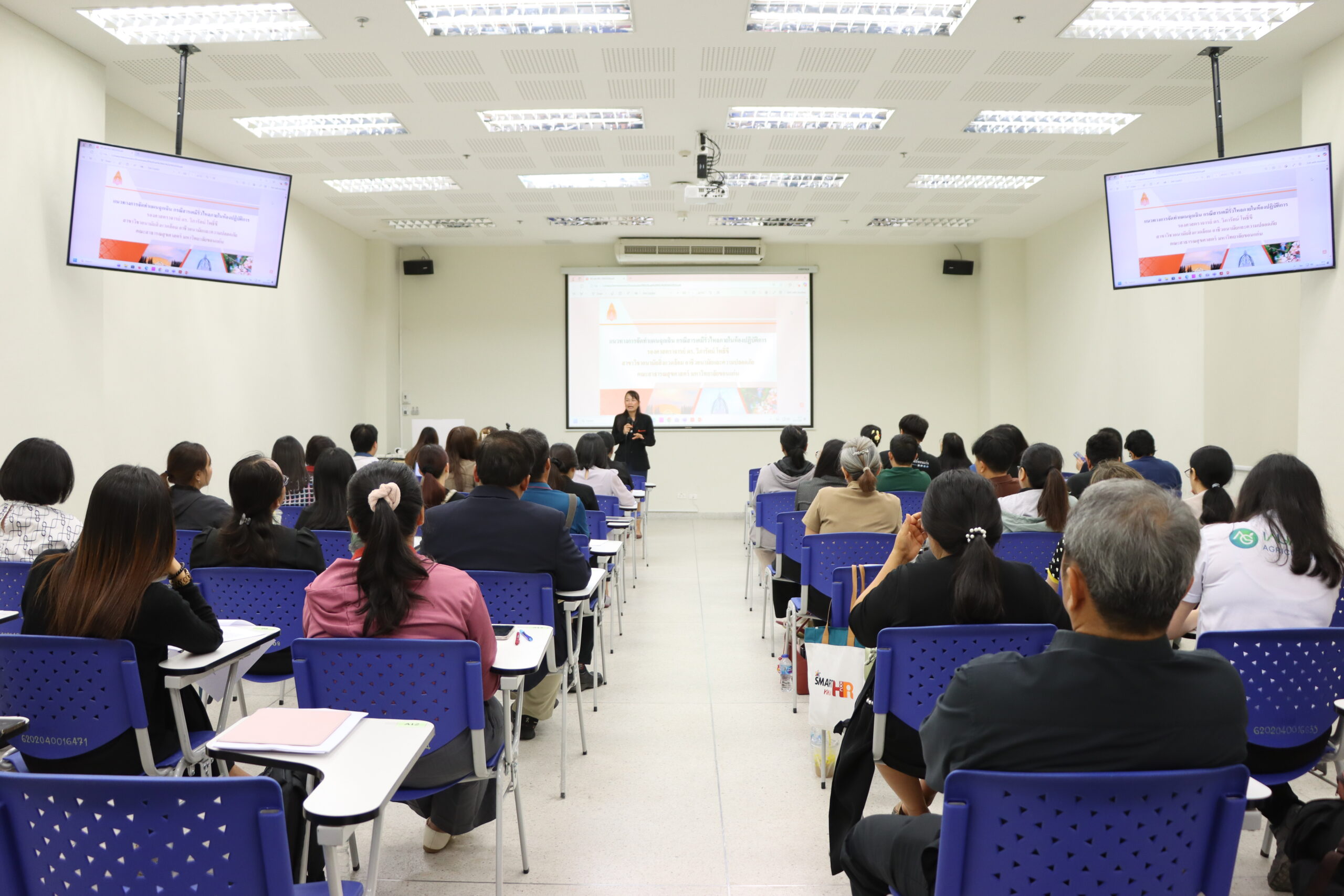
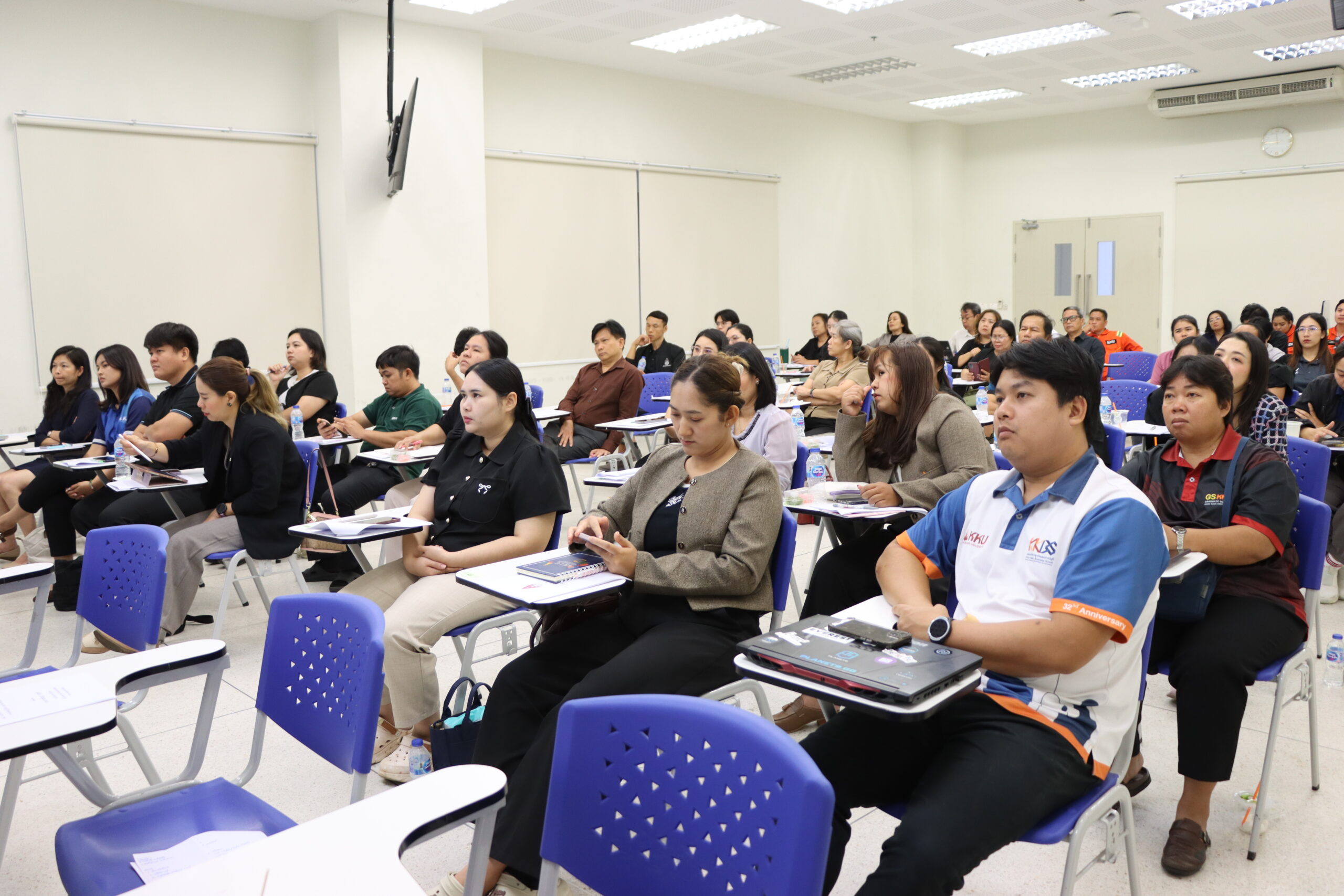
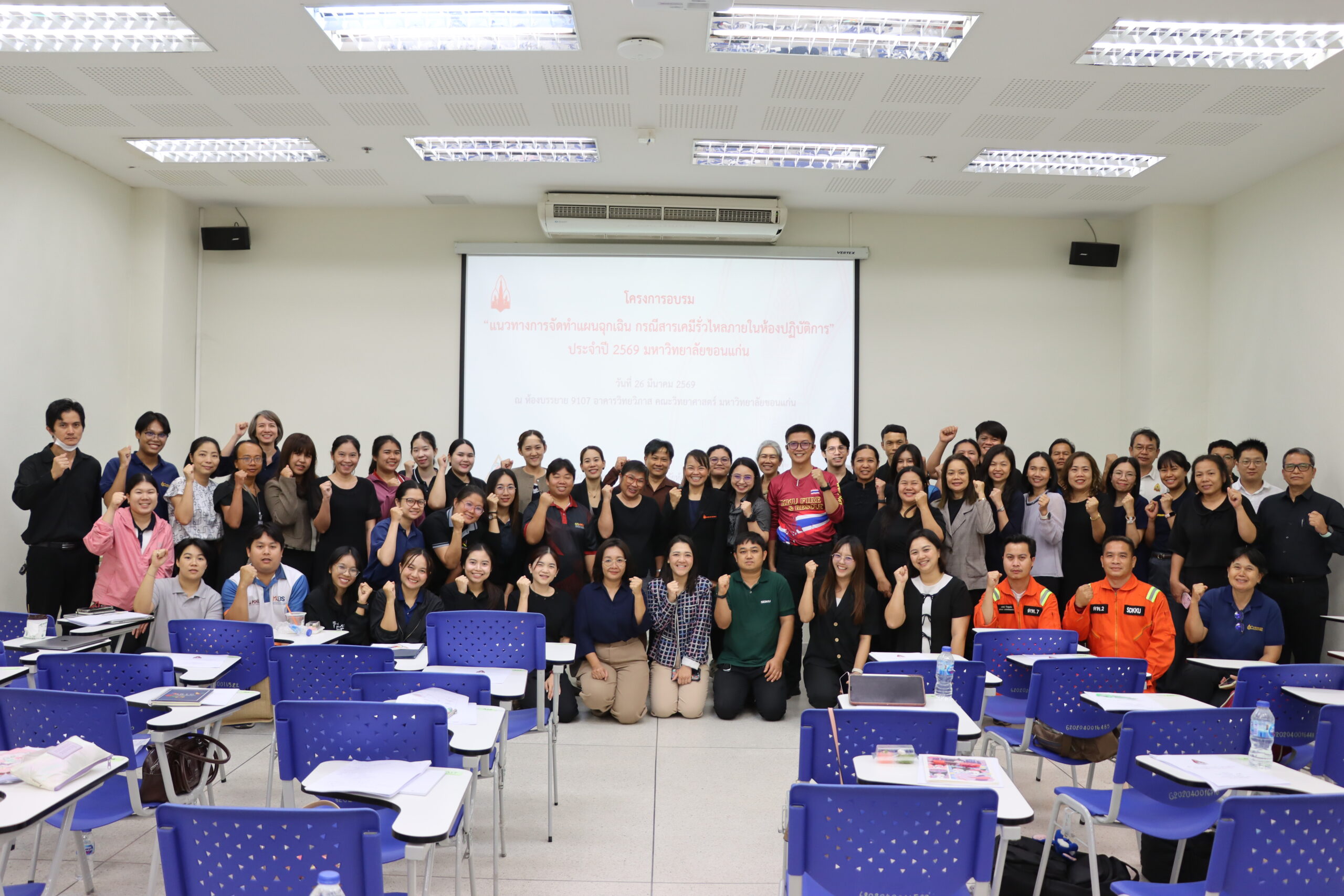
มข. ต่อยอดมาตรฐาน ESPReL รุกจัดอบรมเข้ม “แผนฉุกเฉินสารเคมีรั่วไหล” ยกระดับความปลอดภัยห้องปฏิบัติการทุกหน่วยงานสู่ความยั่งยืน
Khon Kaen University (KKU), through its Research and Innovation Affairs, in collaboration with the Research Center for Environmental and Hazardous Substance Management (EHSM), Faculty of Engineering, continues to reinforce its leadership in laboratory safety standards. The Committee on Laboratory Safety Standards Related to Chemicals of KKU has organized the 2026 training program entitled “Guidelines for Developing Emergency Response Plans for Chemical Spills in Laboratories” to strengthen the university-wide chemical management system.
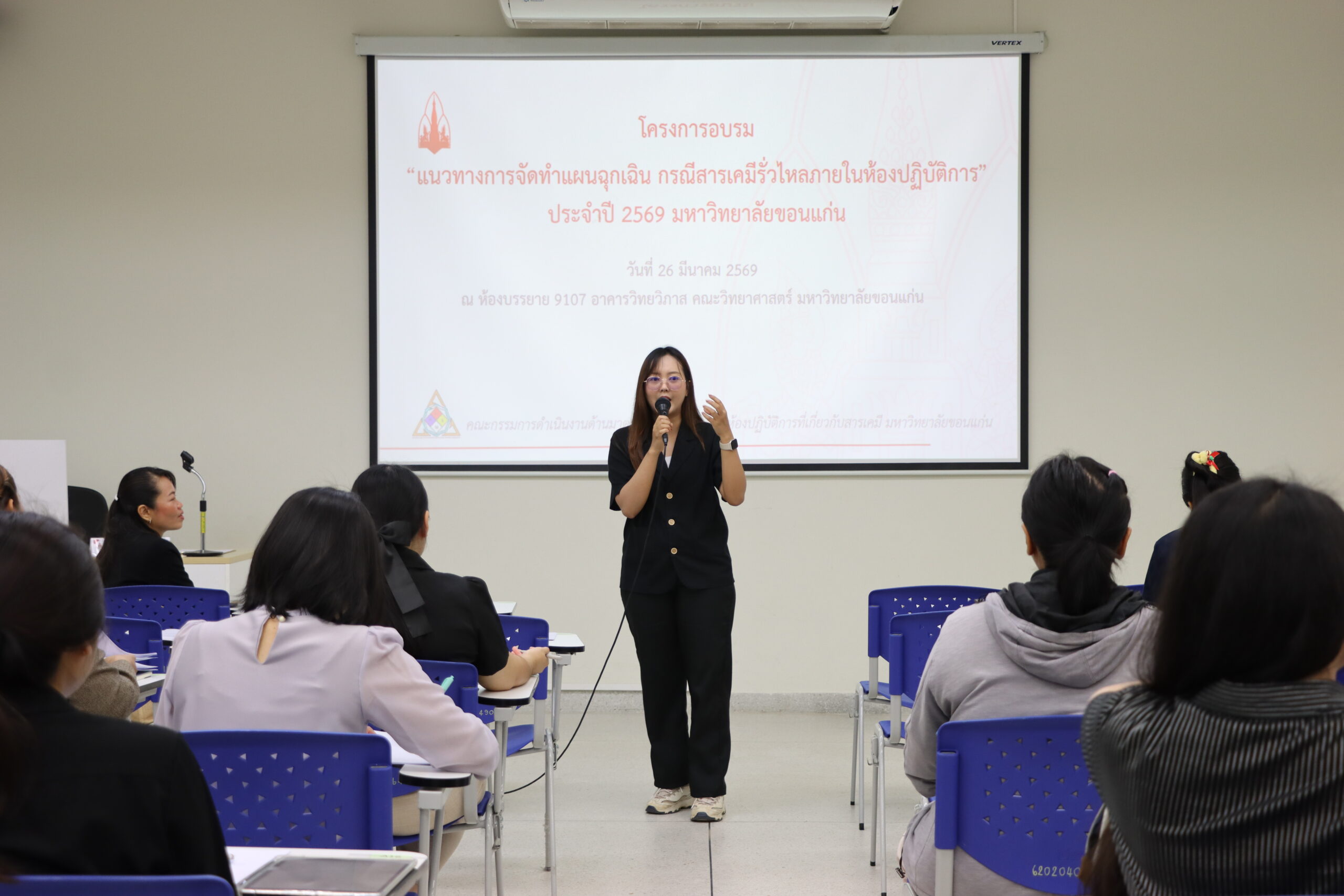
มหาวิทยาลัยขอนแก่น (มข.) โดยฝ่ายวิจัยและนวัตกรรม ร่วมกับ ศูนย์วิจัยด้านการจัดการสิ่งแวดล้อมและสารอันตราย (EHSM) คณะวิศวกรรมศาสตร์ เดินหน้าตอกย้ำความเป็นผู้นำด้านมาตรฐานความปลอดภัยในห้องปฏิบัติการ โดยคณะกรรมการดำเนินงานด้านมาตรฐานความปลอดภัยห้องปฏิบัติการที่เกี่ยวข้องกับสารเคมี มหาวิทยาลัยขอนแก่น จัดโครงการอบรม “แนวทางการจัดทำแผนฉุกเฉิน กรณีสารเคมีรั่วไหลภายในห้องปฏิบัติการ” ประจำปี 2569 เพื่อยกระดับความเข้มแข็งของระบบการจัดการสารเคมีทั่วทั้งมหาวิทยาลัย
As KKU has continuously implemented laboratory safety standards under the ESPReL (Enhancing Safety Practice in Research Laboratory) framework, this initiative marks a significant step in extending these standards into practical application. The program emphasizes the establishment of systematically integrated emergency management systems across all faculties and organizational units.
จากการที่มหาวิทยาลัยขอนแก่นได้ขับเคลื่อนมาตรฐานความปลอดภัยห้องปฏิบัติการตามระบบ ESPReL (Enhancing Safety Practice in Research Laboratory) มาอย่างต่อเนื่อง ครั้งนี้ถือเป็นก้าวสำคัญในการขยายผลและลงลึกถึงการปฏิบัติจริง โดยมุ่งเน้นให้ทุกคณะและทุกหน่วยงานมีระบบการจัดการภาวะฉุกเฉินที่สอดประสานกันอย่างเป็นระบบ
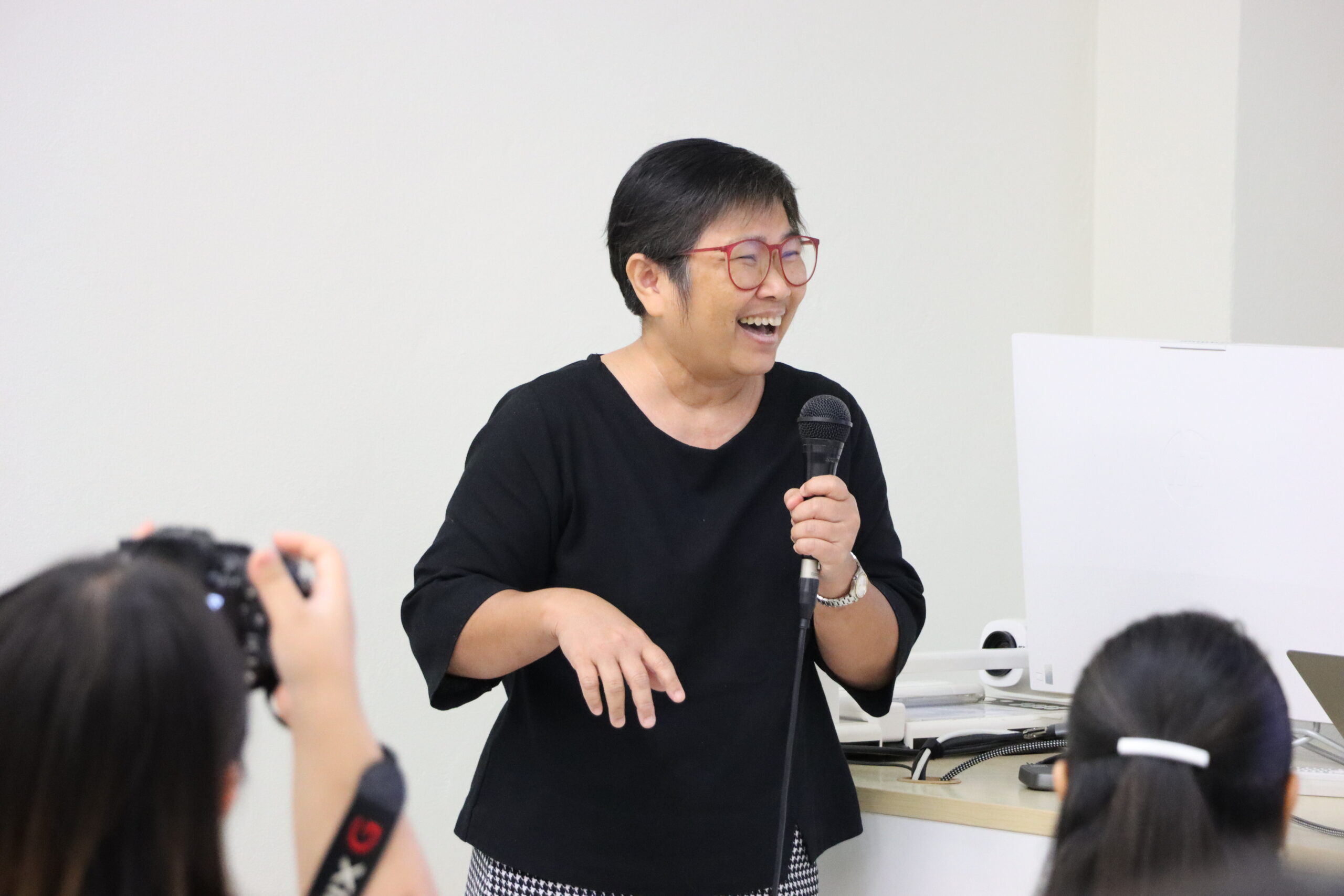
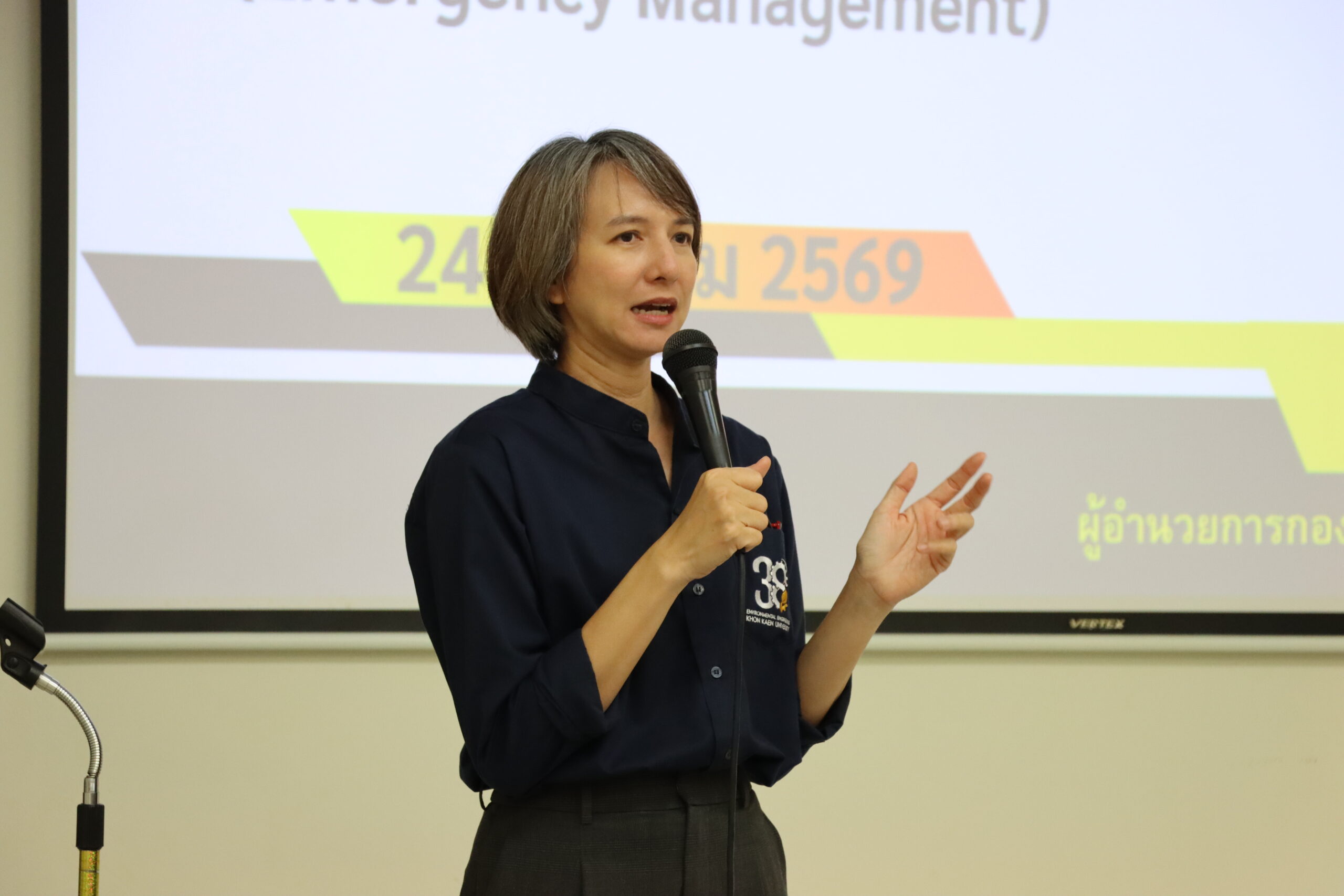
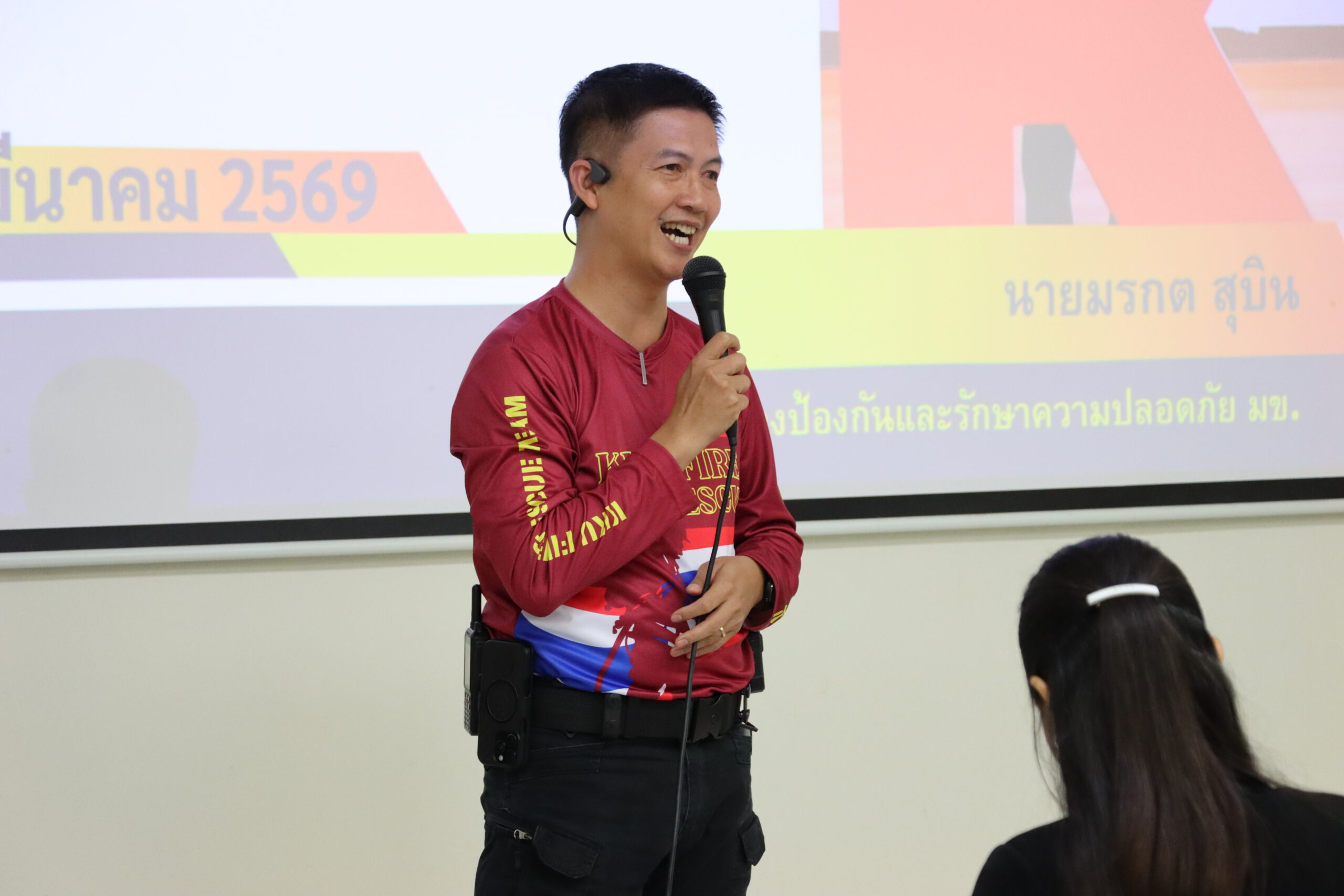
The training featured two distinguished expert speakers:
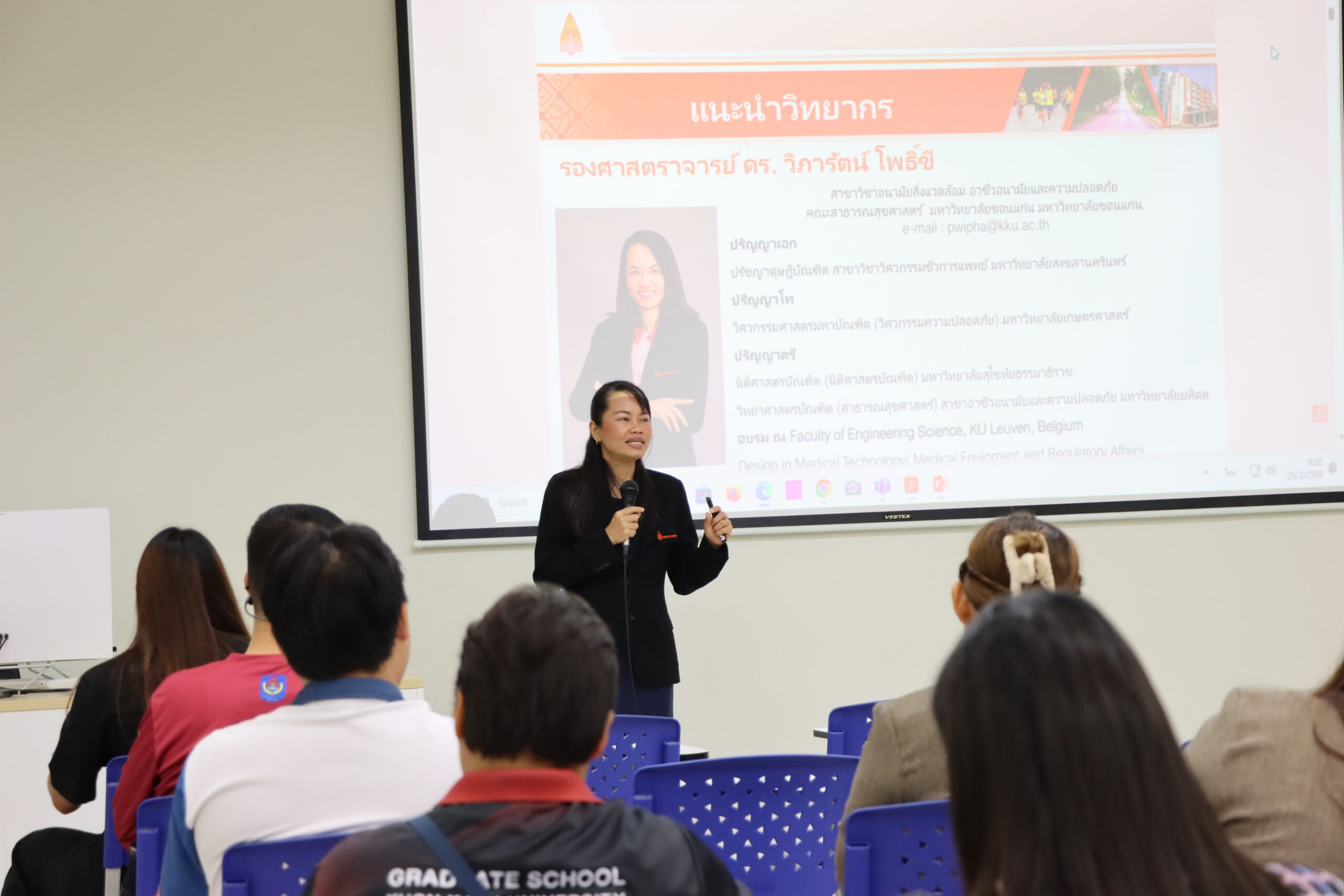
- Associate Professor Wipharat Phokhi, PhD, Department of Occupational Safety and Environmental Health, Faculty of Public Health, KKU
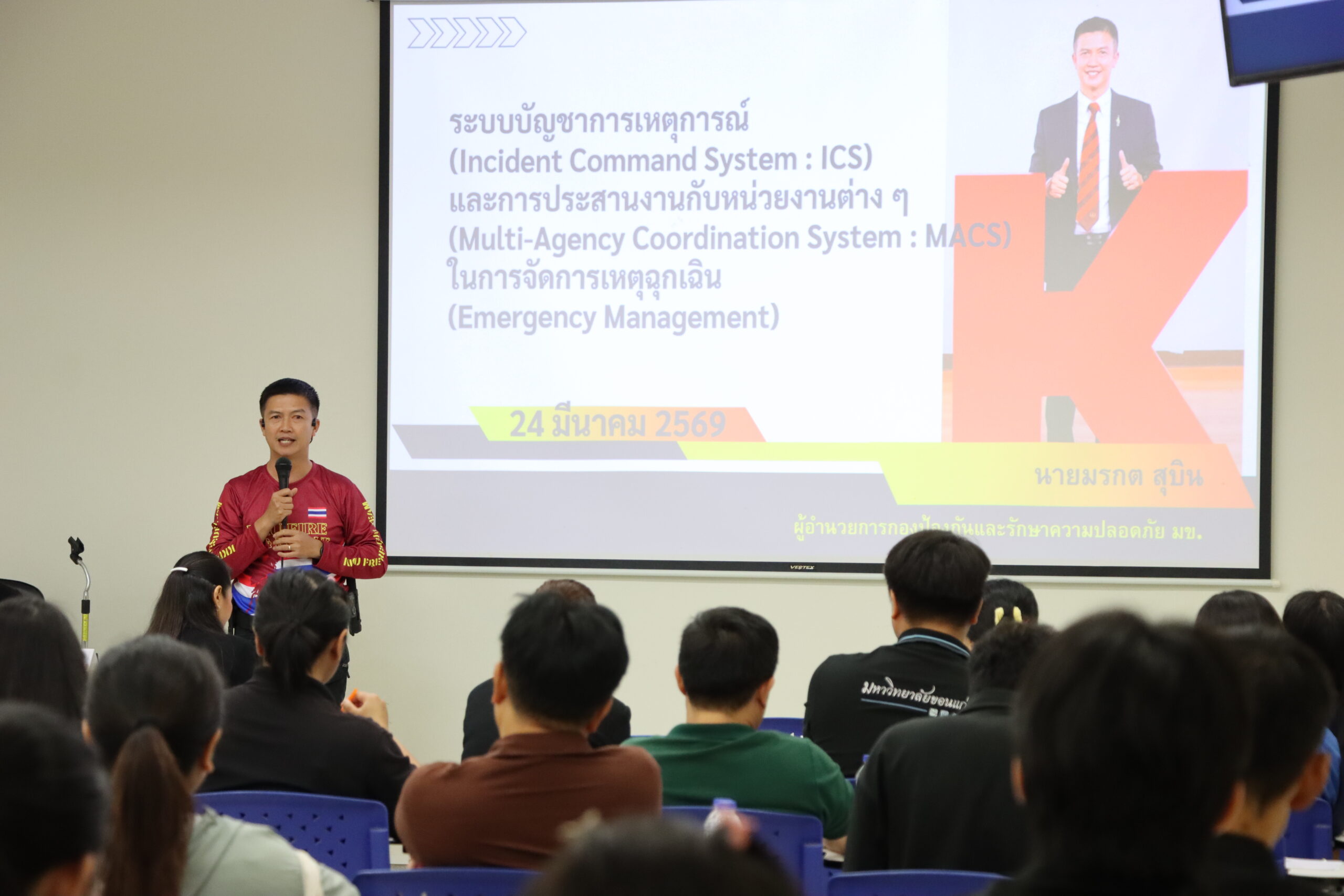
- Mr. Morakot Subin, Director of the Security and Safety Division, KKU
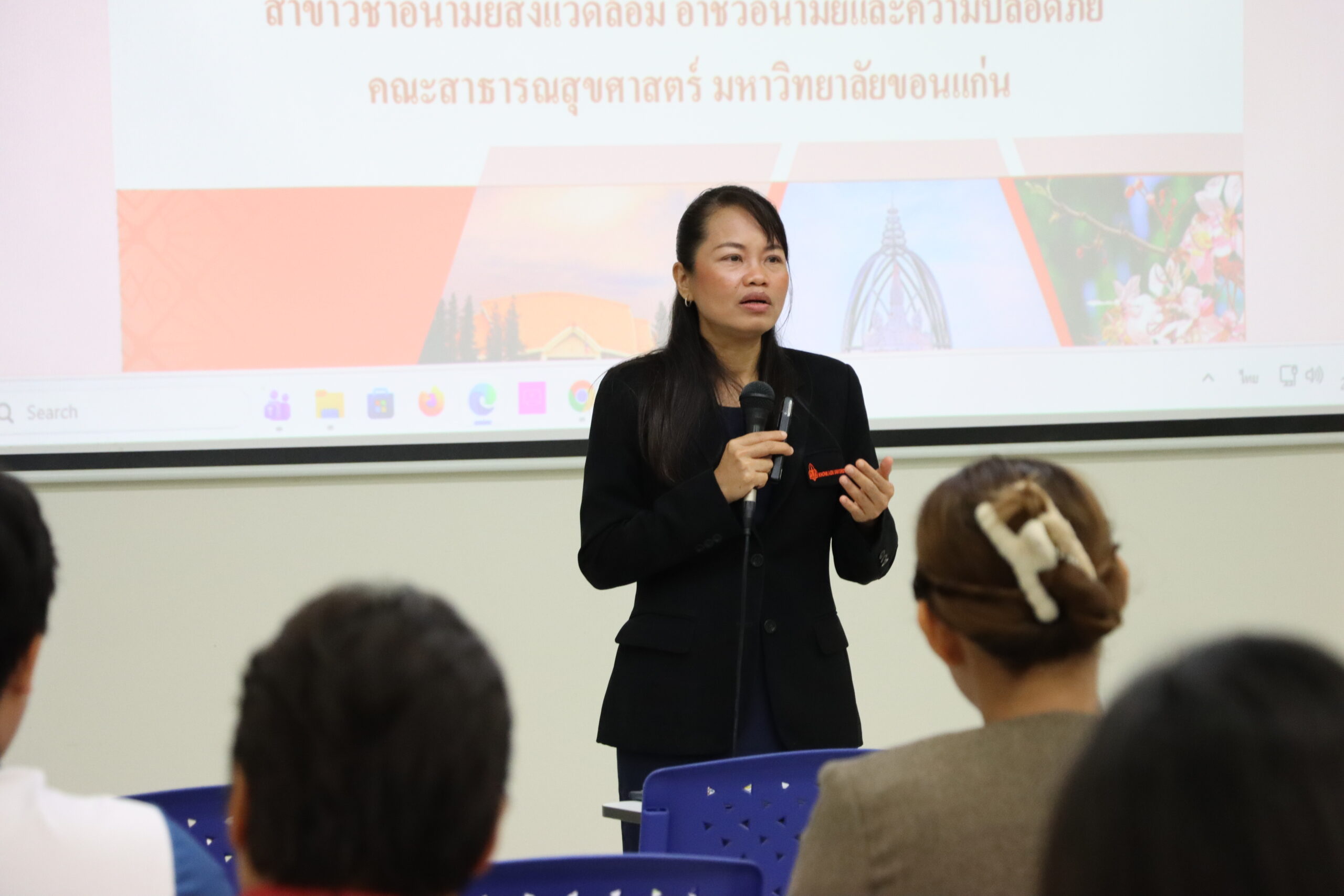
ภายในโครงการได้รับเกียรติจากวิทยากรผู้เชี่ยวชาญ 2 ท่าน ร่วมถ่ายทอดองค์ความรู้ ได้แก่
- รองศาสตราจารย์.ดร.วิภารัตน์ โพธิ์ขี อาจารย์ประจำสาขาวิชาอนามัยสิ่งแวดล้อม อาชีวอนามัยและความปลอดภัย คณะสาธารณสุขศาสตร์ มข.
- นายมรกต สุบิน ผู้อำนวยการกองป้องกันและรักษาความปลอดภัย มข.
The training content focused on enhancing comprehensive chemical safety approach through a Life Cycle Management—from “upstream to downstream”—covering safe procurement practices, laboratory usage processes, and proper disposal procedures in accordance with academic standards. Particular emphasis was placed on the development of chemical spill emergency response plans, linking operational levels from Faculties and organizational units to the university, local, and provincial levels, in alignment with international ESPReL safety indicators.
เนื้อหาการอบรมมุ่งเน้นการเสริมสร้างศักยภาพการจัดการความปลอดภัยสารเคมีแบบครบวงจร (Life Cycle Management) ตั้งแต่ “ต้นน้ำถึงปลายน้ำ” เริ่มตั้งแต่หลักการจัดซื้อจัดจ้างที่ปลอดภัย กระบวนการใช้งานในห้องปฏิบัติการ ไปจนถึงขั้นตอนการนำส่งกำจัดที่ถูกต้องตามหลักวิชาการ นอกจากนี้ยังเน้นย้ำเรื่อง “การจัดทำแผนฉุกเฉินกรณีสารเคมีรั่วไหล” ที่เชื่อมโยงตั้งแต่ระดับคณะ/หน่วยงาน ไปจนถึงระดับมหาวิทยาลัย ท้องถิ่น และจังหวัด เพื่อให้สอดคล้องกับตัวชี้วัดความปลอดภัยตามมาตรฐาน ESPReL ในระดับสากล
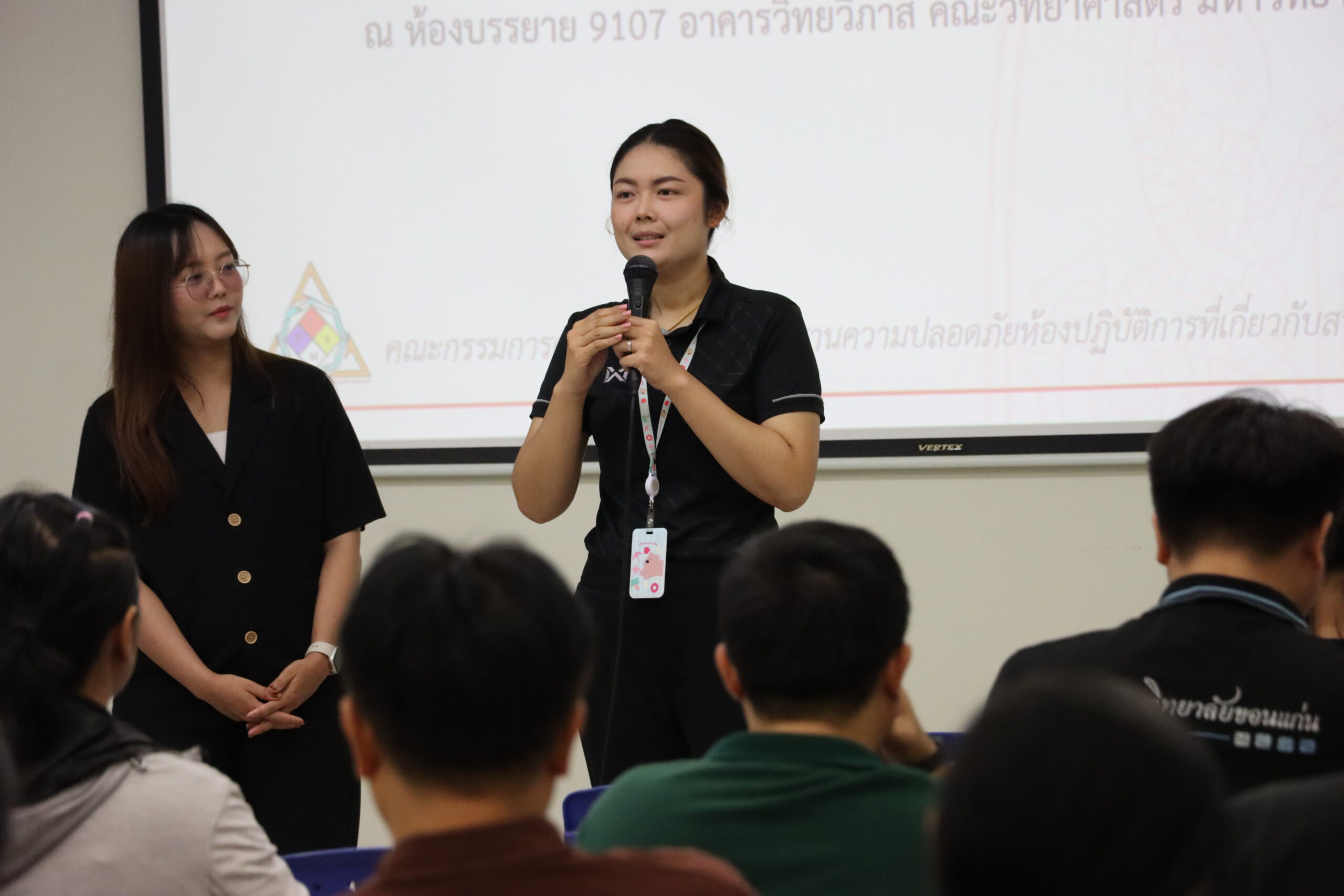
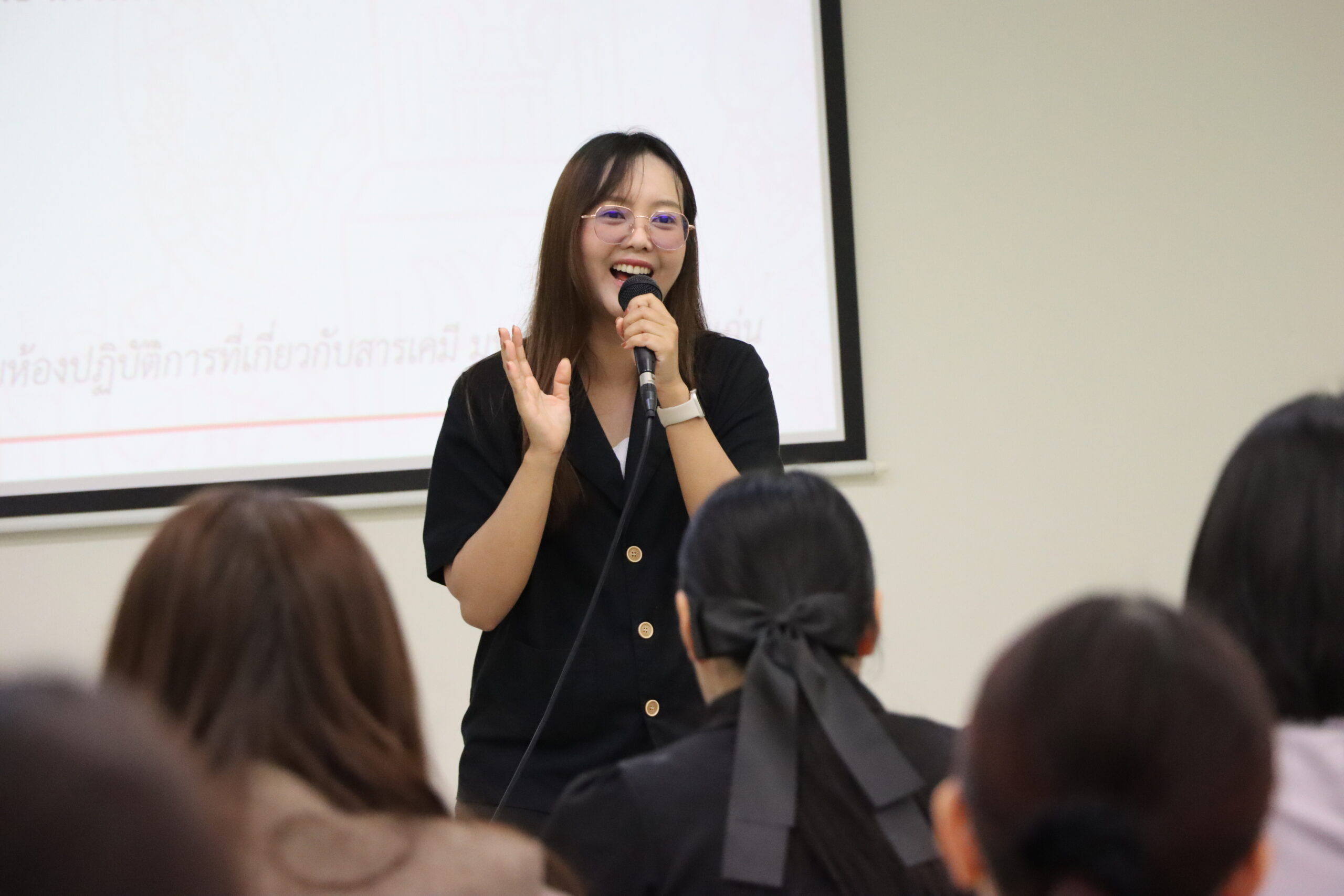
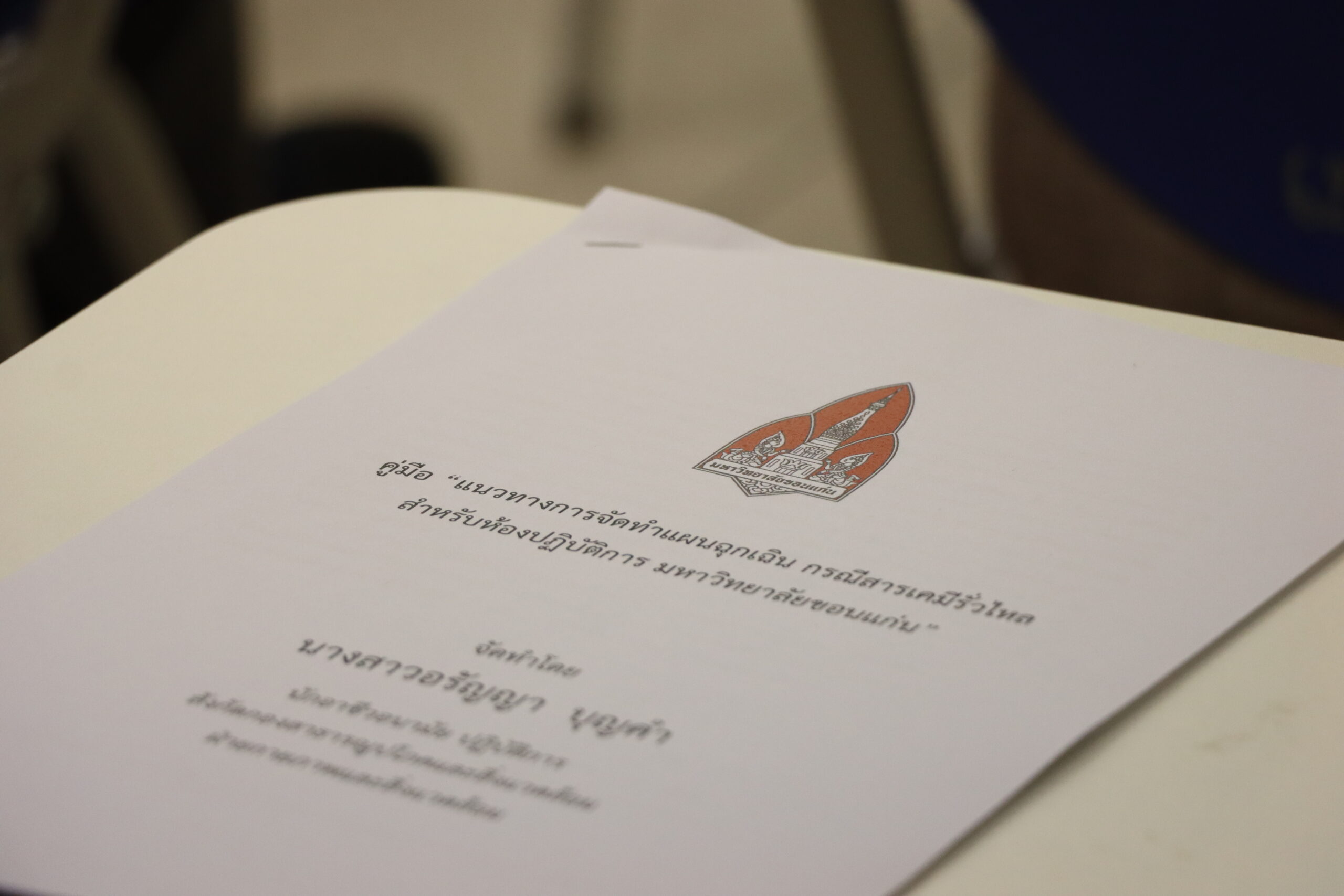
The knowledge-sharing sessions were complemented by a key resource: the manual entitled “Guidelines for Developing Emergency Response Plans for Chemical Spills in Laboratories, Khon Kaen University,” prepared by Ms. Aranya Boonkam, an occupational health and safety officer from the Public Utility, Energy and Environment Management Division, KKU. This manual serves as a principal reference to provide clear operational guidance for personnel and students in responding effectively to chemical spill incidents.
การบรรยายให้ความรู้ในวันนี้ควบคู่กับเครื่องมือสำคัญ คือ คู่มือ “แนวทางการจัดทำแผนฉุกเฉิน กรณีสารเคมีรั่วไหลสำหรับห้องปฏิบัติการ มหาวิทยาลัยขอนแก่น” ซึ่งจัดทำโดย นางสาวอรัญญา บุญคำ นักอาชีวอนามัย สังกัดกองสาธารณูปโภคและสิ่งแวดล้อม เพื่อใช้เป็นเครื่องมือหลักให้บุคลากรและนักศึกษามีแนวทางปฏิบัติที่ชัดเจนเมื่อเกิดเหตุการณ์สารเคมีรั่วไหล
Ms. Aranya Boonkam, the manual represents an integration of ESPReL safety principles with the operational context of Khon Kaen University, emphasized that the document integrates ESPReL safety principles with the real operational context of KKU. It comprehensively covers:
- Pre-incident planning: Preparation and Prevention Plan
- Emergency response planning: Procedures for incident control based on severity levels
- Post-incident recovery planning: Management and remediation processes
It also outlines the roles and responsibilities of the Emergency Operations Center (EOC) within each unit, enabling faculties to effectively develop their own emergency response plans. This aims to minimize risks to life, health, and property while ensuring environmental responsibility.
นางสาวอรัญญา บุญคำ ผู้จัดทำคู่มือ ได้บรรยายถึงความสำคัญของคู่มือฉบับนี้ว่า เป็นการบูรณาการหลักการความปลอดภัยตามมาตรฐาน ESPReL เข้ากับบริบทจริงของ มข. โดยครอบคลุมเนื้อหาสำคัญตั้งแต่
– แผนก่อนเกิดเหตุ: การเตรียมความพร้อมและป้องกัน (Preparation and Prevention Plan)
– แผนตอบโต้ขณะเกิดเหตุ: ขั้นตอนการระงับเหตุตามระดับความรุนแรง (Emergency Response)
– แผนการฟื้นฟูหลังเกิดเหตุ: การบริหารจัดการและเยียวยา (Post-Incident Recovery Plan)
รวมไปถึงบทบาทหน้าที่ของศูนย์อำนวยการเหตุฉุกเฉิน (EOC) ภายในหน่วยงาน เพื่อให้ทุกคณะสามารถนำไปประยุกต์ใช้จัดทำแผนฉุกเฉินระดับหน่วยงานได้อย่างมีประสิทธิภาพ ลดความสูญเสียต่อชีวิต สุขภาพ และทรัพย์สิน และเป็นมิตรต่อสิ่งแวดล้อม
This initiative extends beyond conventional training by providing both a comprehensive “safety compass” through the institutional manual and the transfer of practical expertise in emergency management from subject-matter experts. It thereby reinforces the development of laboratory environments at Khon Kaen University that meet international safety standards, while fostering a robust safety network to support sustainable, high-quality learning and research ecosystems.
การจัดโครงการในครั้งนี้ ไม่เพียงแต่เป็นการให้ความรู้ แต่เป็นการมอบทั้ง “เข็มทิศความปลอดภัย” ผ่านคู่มือฉบับสมบูรณ์ และการถ่ายทอด “ประสบการณ์การจัดการภาวะฉุกเฉิน” จากวิทยากร เพื่อให้ห้องปฏิบัติการของมหาวิทยาลัยขอนแก่นเป็นพื้นที่การวิจัยที่ปลอดภัยระดับสากลอย่างแท้จริง อีกทั้งยังเป็นการสร้างเครือข่ายความปลอดภัยที่เข้มแข็ง เพื่อให้ห้องปฏิบัติการของมหาวิทยาลัยขอนแก่นเป็นพื้นที่แห่งการเรียนรู้และการวิจัยที่ปลอดภัยและได้มาตรฐานสูงสุดอย่างยั่งยืน